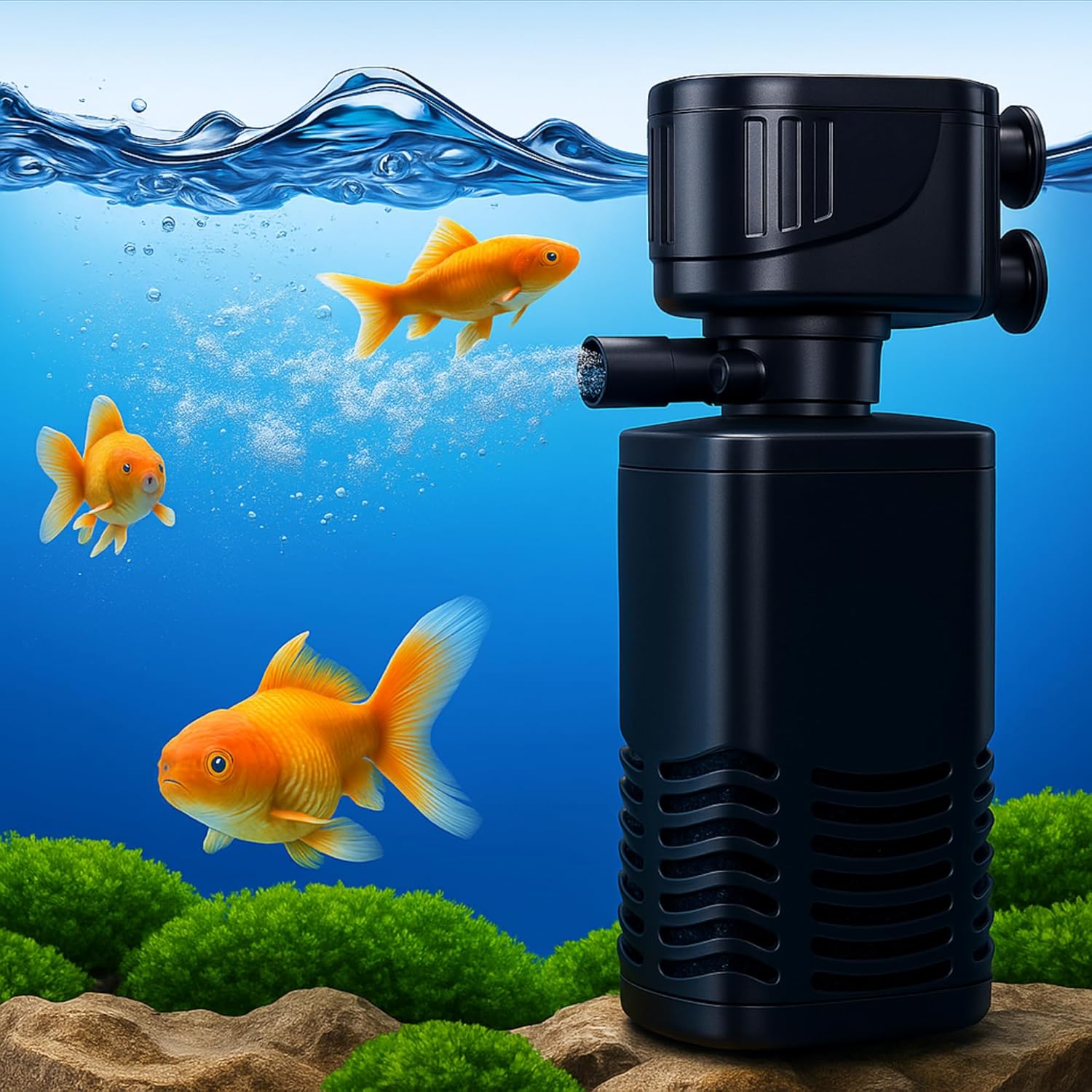
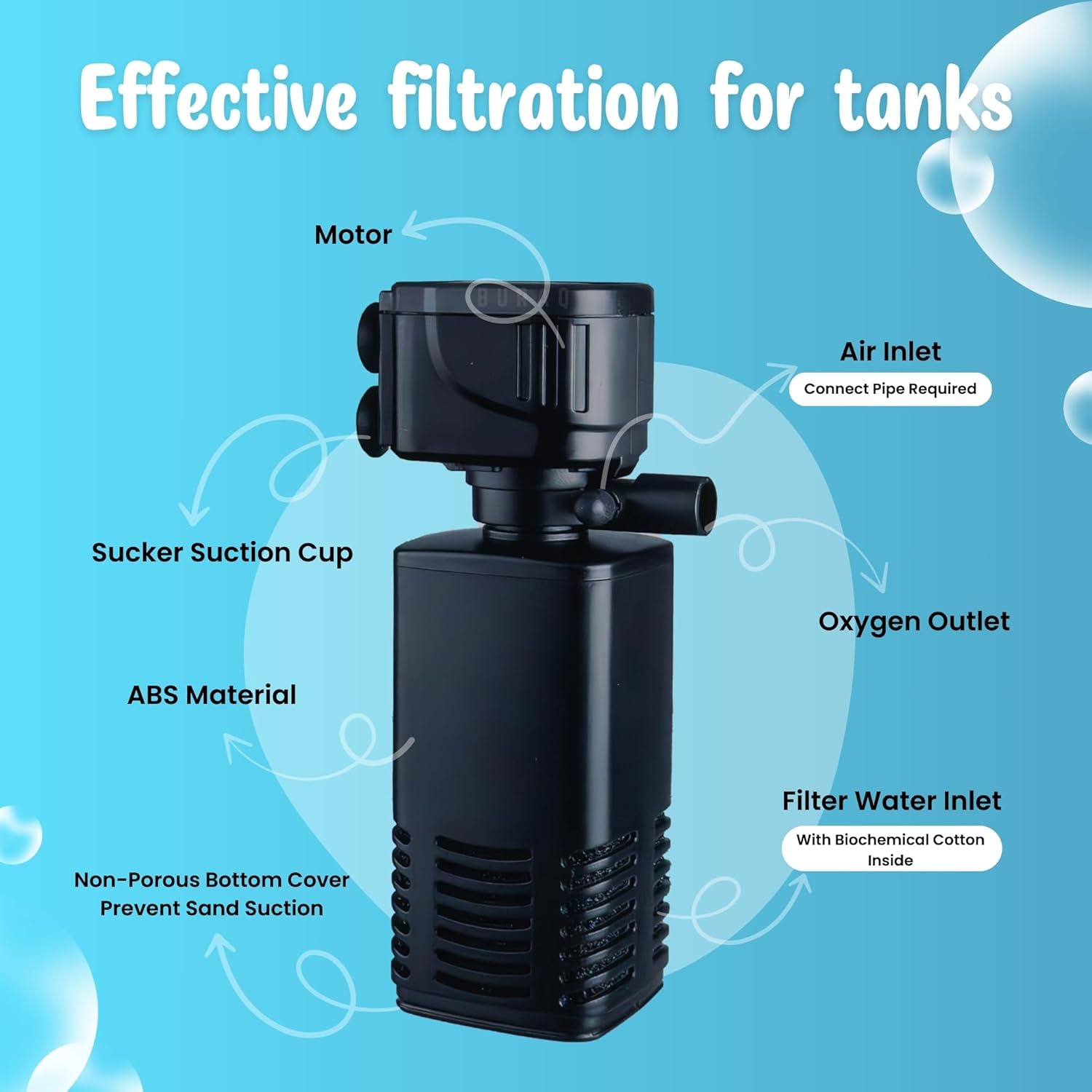
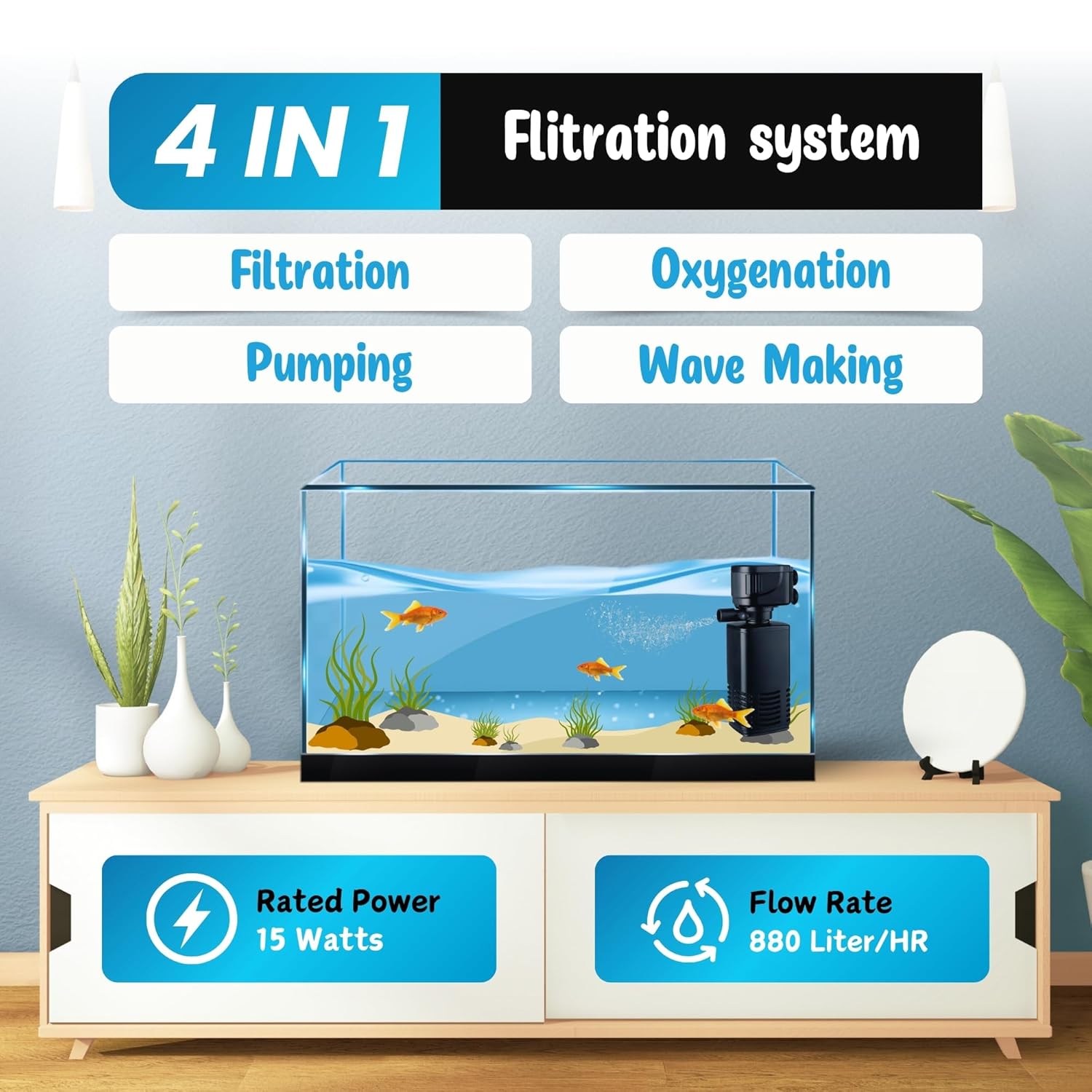
- 4-IN-1 FILTRATION SYSTEM – Performs four key functions: filtration, oxygenation, water circulation, and wave making all in one compact unit. Helps remove waste, increase oxygen, and keep your tank water crystal clear.
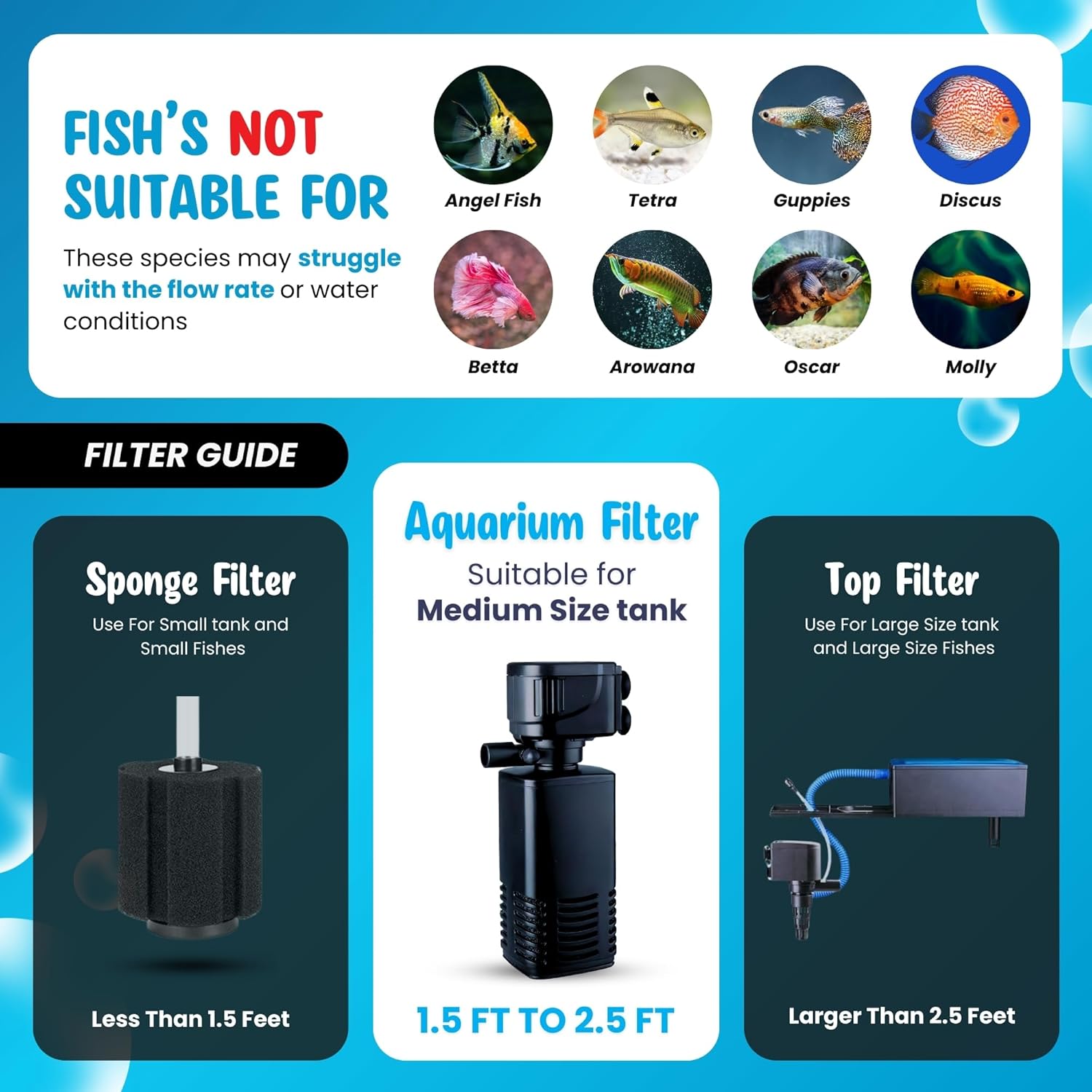
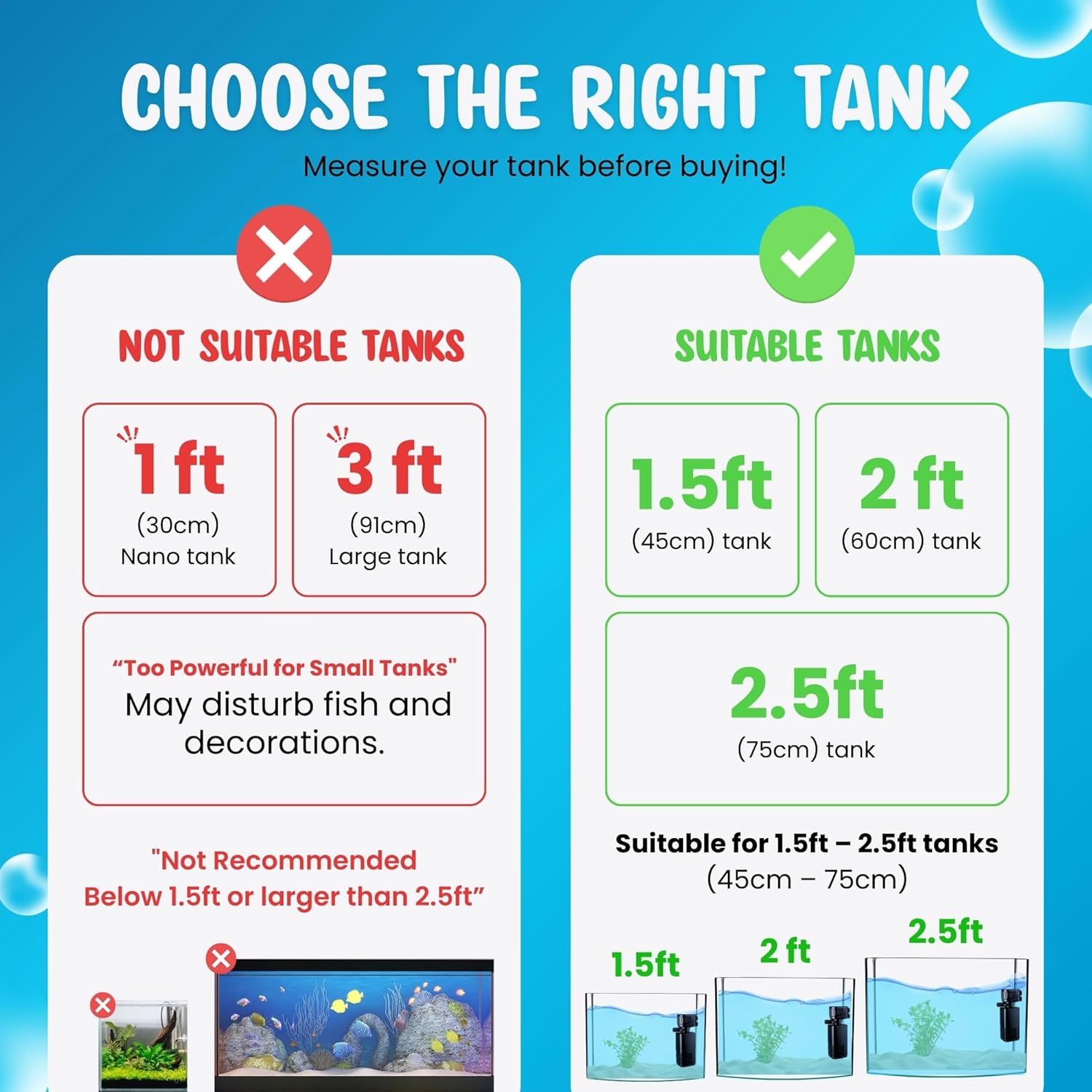
- PERFECT FOR MEDIUM-SIZED TANKS (1.5 – 2.5 FEET) – Delivers strong 880 L/hr flow rate with 15W power, ideal for tanks between 1.5 ft to 2.5 ft. Not recommended for very small or large tanks, as the strong flow may disturb fish.
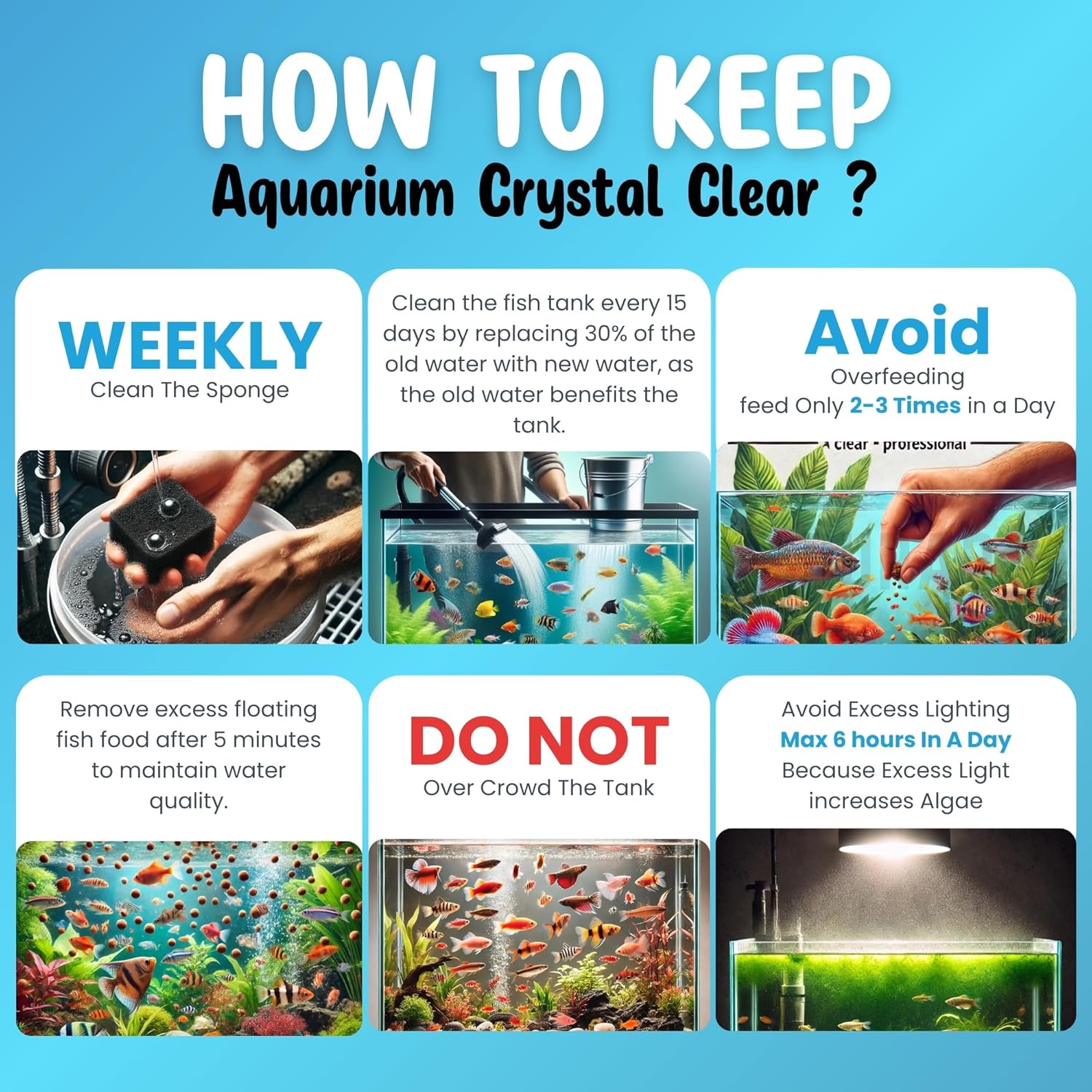
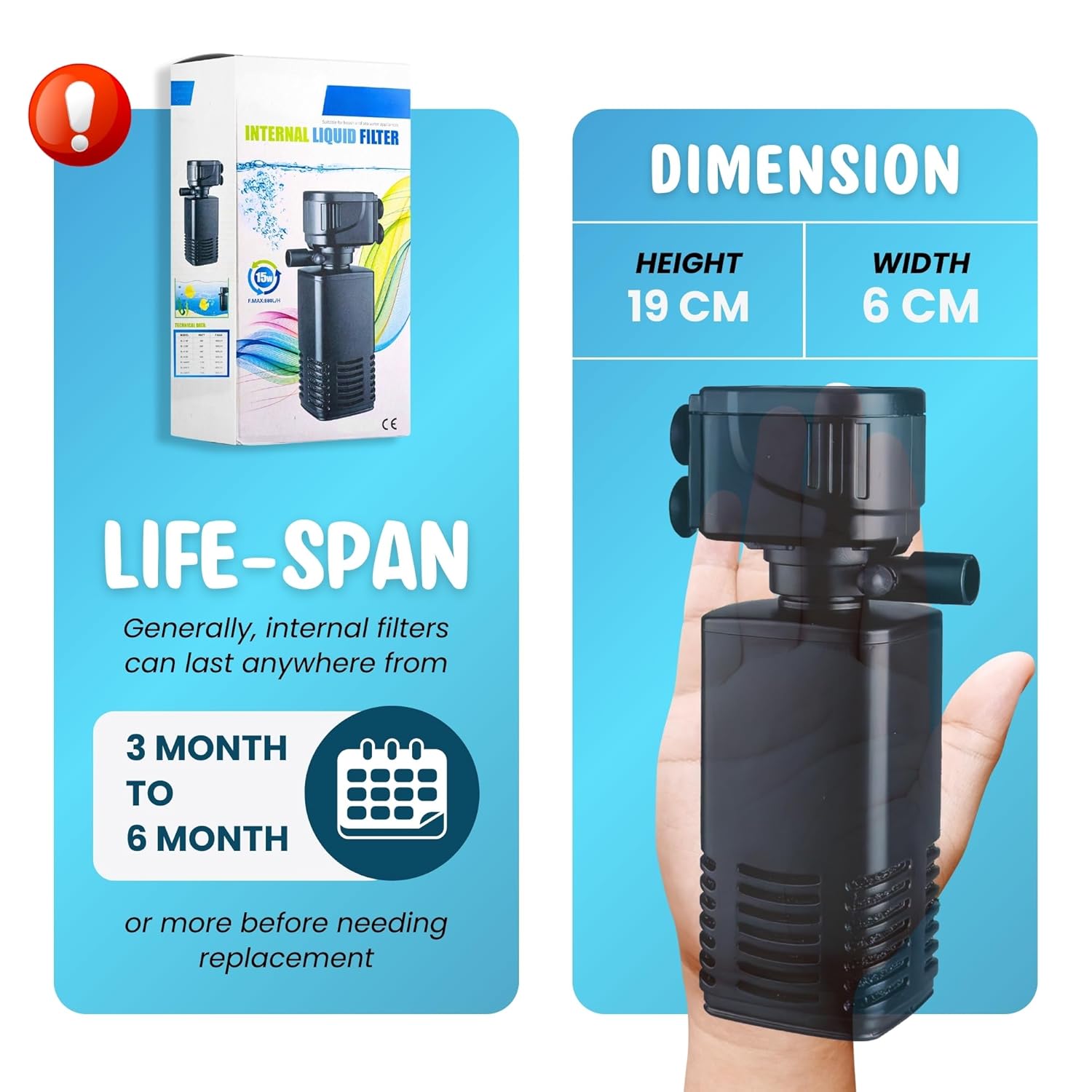
- WHISPER-QUIET PERFORMANCE & EASY MAINTENANCE – Designed to run silently without disturbing your environment—perfect for home or office aquariums. For best results, clean the sponge every 15 days, change only 30–50% of the tank water, and avoid overfeeding or excessive lighting to maintain clean, healthy water.
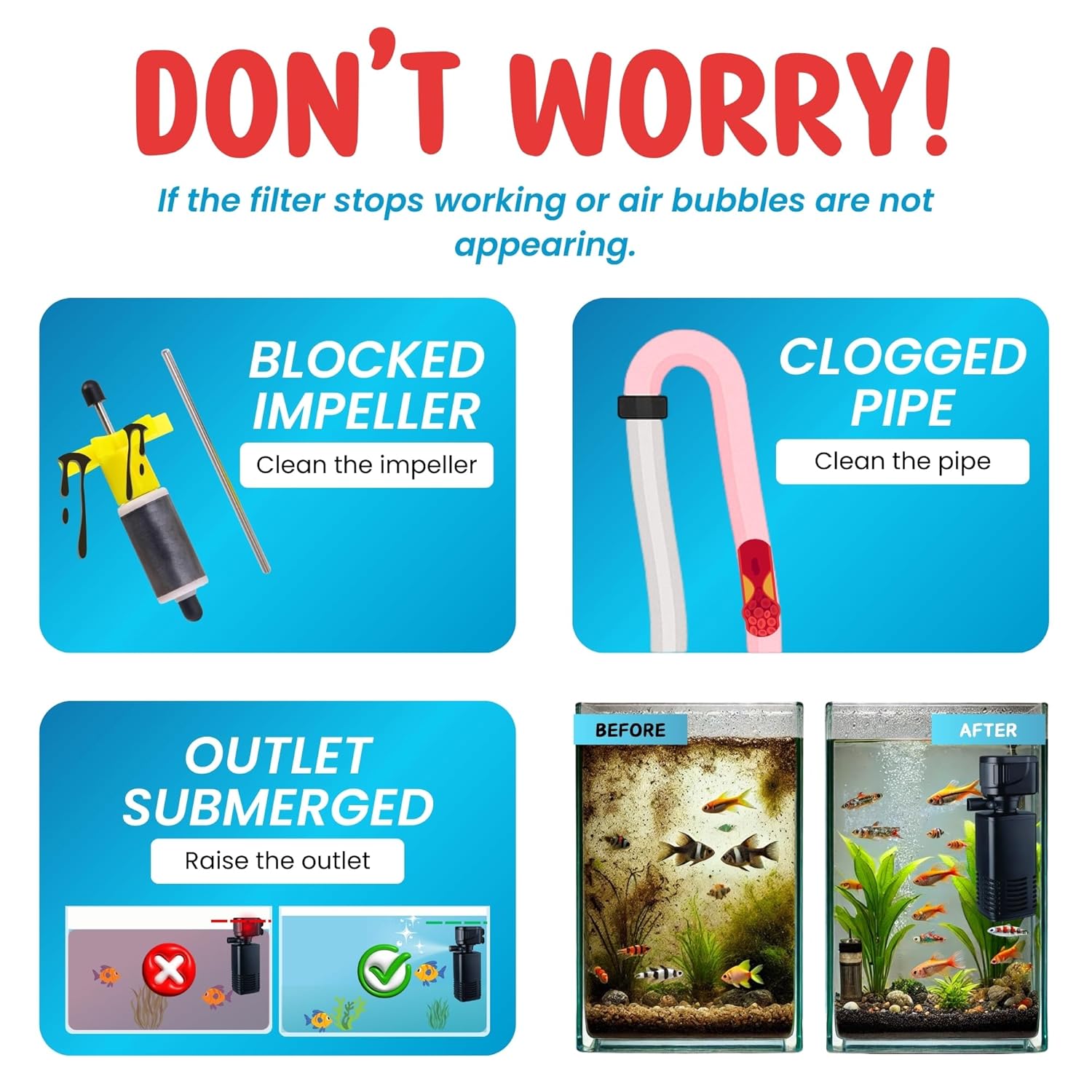
- SIMPLE TROUBLESHOOTING IF NOT WORKING – If you don’t see water movement or air bubbles, check for a blocked impeller, a clogged pipe, or a submerged outlet. Cleaning or adjusting these parts usually gets the filter running again quickly.
- NOT FOR DELICATE OR SMALL FISH – This filter is not suitable for species like Betta, Guppies, Tetra, Angel Fish, Arowana, or Discus. It is best used with hardy, active fish that enjoy strong water flow.
Aquarium Filter, 4 in 1 High Power Oxygen Filteration System, Low Power Consumption Submersible & Efficient Fish Tank Filter for Crystal Clear Water
Original price was: ₹699.00.₹275.00Current price is: ₹275.00.
Description
Introduction
Choosing the right aquarium filter is one of the most important decisions when setting up or maintaining an aquatic environment. A high-power filtration system doesn’t just make water look clean—it keeps conditions stable, safe, and healthy for fish, plants, invertebrates, and all life forms in your tank. Whether you’re a beginner or experienced hobbyist, understanding the components, functioning, benefits, maintenance, and key selection criteria of an aquarium filter is vital. In this guide, we’ll walk through everything you need to know about a high-performance aquarium filter, how it works, how it impacts aquarium ecology, and how to get the most from it.
What is a High‑Power Filtration System?
A high‑power filtration system is an aquarium filter designed to handle intense workloads: large water volumes, heavy fish stocking, high bioload from plants or decorations, or sensitive species that demand pristine water. Such systems are built to deliver excellent mechanical, chemical, and biological filtration, maintain high flow rates, and often feature customizable media with space for biological media, activated carbon, sponges, etc.
In general, a high‑power aquarium filter will have:
-
strong pump or motor to drive water flow
-
multiple filtration stages (mechanical → chemical → biological)
-
media that offer high surface area (bio media, ceramic rings, bio‑balls)
-
ease of maintenance (accessible parts, modular design)
-
durability and reliable performance over time
Types of Filtration: The 3 Pillars
To understand how a high‑power aquarium filter works, it helps to break filtration into three main types:
Mechanical Filtration
Mechanical filtration removes solid particles—uneaten food, plant matter, fish waste, debris—from the water column. These are physical particles that cloud water, may decompose, raise ammonia, etc. The first stage in most aquarium filter systems is some type of mechanical media: foam pads, filter floss, coarse sponges, fine sponges or pads. Cleaning or replacing mechanical media regularly is important to ensure flow doesn’t get obstructed. aboutfishonline.com+2Aqueon+2
Biological Filtration
Once mechanical filtration clears particles, biological filtration takes over: beneficial bacteria colonize biological media (bio‑balls, ceramic rings, porous materials) inside the aquarium filter. These bacteria convert ammonia (toxic to fish) into nitrites, then convert nitrites into nitrates, which are less harmful in low concentrations. The nitrogen cycle depends heavily on biological filtration to keep water safe. Wikipedia+3Aqueon+3ourmarinespecies.com+3
Chemical Filtration
Chemical filtration is about dissolving or absorbing chemicals, odors, toxins, discoloration. Media such as activated carbon, zeolite, certain resins, etc. are used in a high‑power aquarium filter to adsorb organic compounds, medications, heavy metals, chemical wastes. It’s often optional, but for many setups, it’s essential for maintaining clarity and removing dissolved toxins. aquariumpharm.com+3ourmarinespecies.com+3Buce Plant+3
Key Components of a High‑Power Aquarium Filter
When designing or selecting a strong aquarium filter, look for these features and parts:
-
Pump / Impeller / Motor
-
Needs to generate adequate flow (often expressed in LPH – liters per hour, or gallons per hour) relative to tank volume.
-
Durable, reliable motor parts, good impeller design; less vibration, less noise.
-
Adjustable flow control is useful so you can tailor flow based on fish species or plants.
-
-
Filter Stages (Media Chambers)
-
Mechanical media (prefilters, sponges, floss pads) up front.
-
Biological media (ceramic rings, bio‑balls, porous blocks) in middle chambers.
-
Chemical media (activated carbon, zeolite, etc.) in final stage if needed.
-
-
Filter Media Types
-
Ceramic or porous bio media: high surface area for bacteria. ourmarinespecies.com+2Buce Plant+2
-
Sponges / foam: dual function mechanical + supportive of biological bacteria growth. aboutfishonline.com+2School Of Scape+2
-
Activated carbon / chemical resins: for clarity, odor, chemicals. Buce Plant+1
-
-
Flow Rate & Turnover
-
High‑power means more turnover: recommended often is 4–6× entire tank volume per hour, sometimes more if heavy bioload.
-
Must balance strong flow with the comfort of fish and plants (some fish dislike strong currents).
-
-
Build & Durability
-
Materials that resist corrosion (especially for saltwater setups).
-
Seals, hoses, connectors should be leak‑proof.
-
-
Ease of Maintenance
-
Access panels or removable cartridges and media.
-
Prefilters or brushes easy to clean without dismantling whole system.
-
Parts that can be replaced separately.
-
Benefits of Using a High‑Power Filtration System
Investing in a top‑tier aquarium filter brings many advantages. Here are key benefits:
-
Stable Water Quality
Waste, ammonia, nitrites, dissolved organics are removed more efficiently. This means less stress for fish, fewer disease outbreaks.
-
Clearer Water / Visual Appeal
Mechanical filtering catches suspended particles; chemical media polish the water; biological media reduce cloudy water caused by ammonia spikes. Aquariums look beautiful.
-
Healthier Fish & Plants
Clean water, stable biology encourages vibrant coloration in fish, lush plant growth, better oxygen levels, less algae growth.
-
Reduced Maintenance Frequency
Though maintenance is still needed, high power systems often reduce how often you need full cleanings because they process waste more efficiently.
-
Flexibility for Stocking & Bioload
If you want many fish, larger fish, or high‑waste species, a strong aquarium filter allows you to maintain that without compromising water quality.
-
Improved Oxygenation and Circulation
A good high‑power filter helps move water, produce surface agitation or flow, which helps gas exchange (oxygen in, carbon dioxide out).
-
Reduced Algae and Unwanted Compounds
Organic compounds that fuel algae are removed; ammonia and nitrite spikes prevented; chemical impurities handled by media – helps control algae and odor.
Types of Aquarium Filters & Where a High‑Power System Fits
There are various types of filters; understanding them helps you see when a high‑power aquarium filter is appropriate.
-
Hang‑On‑Back (HOB) / Power Filters: Very common, easy to use. Good for small to medium tanks. Many power filters are high‑power versions if sized properly. They combine multiple media stages.
-
Canister Filters: Large external filters with higher flow capacity, more media space. Excellent for larger aquariums, planted tanks, reef tanks.
-
Sponge Filters: Gentle, low flow filters mostly biological + mechanical. Not enough alone for heavy bioload or large tanks but great supplemental filtration.
-
Undergravel Filters: Less common now, rely on substrate and gravel plates. Usually supplemented with a stronger aquarium filter system.
-
Sump Filters / Inline Filters: Often used in marine or large freshwater systems. High capacity, many chambers.
-
Protein Skimmers, Fluidized Bed Filters, etc.: Specialized for marine systems or very demanding setups.
A high‑power aquarium filter usually means either a very strong HOB or power filter, or a canister / sump / combination system handling high flow.
Choosing the Right Aquarium Filter: What to Consider
When selecting a high‑power aquarium filter, think through these criteria:
-
Tank Volume & Dimensions
-
Volume (in litres or gallons) is primary.
-
Depth & shape affect flow. A long, shallow tank behaves differently than tall.
-
-
Bioload: Number & Type of Fish / Plants
-
More fish, large fish, messy fish → need more filtration.
-
Plants produce waste too, but can help with nutrient uptake.
-
-
Flow Preference
-
Some fish / plants prefer gentle flow; others thrive in strong currents. Matching filter flow to your inhabitants is key.
-
-
Filtration Media Customizability
-
Ability to change or upgrade media depending on need (e.g. more bio media, or switch in chemical media).
-
-
Noise / Power Consumption
-
Efficient motors and quiet design matter if the aquarium is in living space.
-
-
Space & Setup
-
External filters take room behind or below tank; HOB filters need space on top/back edges.
-
-
Maintenance Capability
-
If you can clean / maintain often, you can run more complex or higher flow systems.
-
-
Budget
-
Upfront cost + ongoing media cost + power cost. High power filters may cost more initially but often save labour/effort.
-
How to Set Up a High‑Power Aquarium Filter
Here are steps to properly set up and get full benefit from a strong aquarium filter:
-
Install According to Instructions
Ensure secure fittings, correct orientation, no leaks. Prime the filter as required.
-
Add Media in Correct Order
Mechanical media first (coarse → fine), then biological, then chemical if used.
-
Cycle the Filter
Before introducing many fish, let beneficial bacteria grow. This may take weeks. Monitor ammonia, nitrite, nitrate until stable.
-
Adjust Flow & Direction
Position outflows to help circulation; avoid dead zones where water is stagnant. Some filters allow adjusting flow or direction.
-
Monitor Water Parameters
Regularly check ammonia, nitrite, nitrate, pH, dissolved oxygen. A good aquarium filter will help keep these within safe ranges but monitoring helps you catch issues early.
Maintenance & Care
To get long life and steady performance from a high‑power aquarium filter, you need consistent care:
-
Clean or rinse mechanical media regularly (but avoid cleaning biological media with tap water—use tank water to preserve bacteria).
-
Replace chemical media per manufacturer’s guidelines (e.g. activated carbon usually needs refresh because it saturates).
-
Inspect impeller, hoses, seals for wear or blockages.
-
Ensure adequate flow is maintained: clogged media reduce flow.
-
Watch for noise or vibration changes—they could signal impeller damage or blockage.
-
Perform water changes as needed (high power filter helps reduce frequency, but doesn’t replace them).
Common Problems & Troubleshooting
Even with a good aquarium filter, issues can arise. Here are common ones and how to address them:
-
Filter too small / insufficient flow: Leads to buildup of ammonia or nitrites, cloudy water. Solution: upgrade to filter with higher flow or add supplementary filtration.
-
Strong current / flow harming fish or plants: Use flow diffusers, redirect outflow, use lower flow mode if available, or choose species adapted to high flow.
-
Media clogging too quickly: Maybe too much waste; consider more frequent mechanical cleaning; use coarse pre‑filters so finer media don’t clog.
-
Bad odors or discoloration: May mean chemical media need replacing, or biological cycle disrupted.
-
Noise / vibration: Check for air bubbles, impeller misalignment, debris in impeller; regularly maintain motor parts.
-
Sudden ammonia spikes: Could be from overfeeding, dead fish, or after replacing all biological media. Be cautious when cleaning biological media – don’t remove all at once.
Aquarium Filter Media Explained
A high‑power aquarium filter relies heavily on good media. Here are common types:
-
Ceramic rings / bio‑rings: porous, high surface area for bacteria. Excellent for biological filtration. ourmarinespecies.com+2Buce Plant+2
-
Bio‑balls / plastic / porous blocks: also biological media; many forms exist. aquariumlesson.com+1
-
Sponges / foams: for mechanical and support for biological colonization. aboutfishonline.com+1
-
Activated carbon: chemical media for clarity, odor removal, toxins. Buce Plant+1
-
Zeolite: for ammonia removal in freshwater tanks. ourmarinespecies.com+1
-
Other resins: used for specific chemical concerns (e.g., nitrate reducers, phosphate removers).
Comparisons: Power Filter vs Other Filter Types
A high‑power aquarium filter is often compared to other styles. Here’s a quick comparison:
| Filter Type | Pros | Cons | Where High‑Power Filter Excels |
|---|---|---|---|
| Sponge Filter | Cheap, low flow, gentle, great for fry or small tanks | Not enough mechanical/chemical capacity; not ideal for large tanks | High‑power aquarium filter handles all stages, large volume, higher flow |
| Undergravel Filter | Hidden, uses substrate for biological filtration | Hard to maintain, limited chemical filtration, less flexibility | High‑power filter gives easier access, better media options |
| Canister Filter | Very high capacity, external placement, customizable media | More expensive, hoses, more complex setup | High‑power aquarium filter in form of HOB / power filters can be simpler, more affordable for many setups |
| Hang‑on‑Back / Power Filter | Easy to install, decent filtration, relatively affordable | May have limited media space, sometimes noisy, may need maintenance more often | A robust high‑power aquarium filter of this type with higher media capacity and adjustable flow can perform very well for many tanks |
Where High‑Power Aquarium Filters Are Especially Beneficial
Situations where investing in a strong aquarium filter makes a big difference:
-
Heavily stocked tanks (many fish, large fish, messy species).
-
Planted aquariums: needing stable water, removal of excess nutrients, but also preservation of biological stability.
-
Saltwater / reef setups: higher demands for chemical filtration, protein skimming, stability.
-
Show tanks or aquascapes: visual clarity, minimal debris, high aesthetic standards.
-
Large tanks where smaller filters cannot maintain required turnover.
Environmental & Health Considerations
-
A well‑chosen aquarium filter helps reduce disease risk (fish illness, algae overgrowth, bacterial outbreaks) by lowering toxins.
-
Clean water is healthier for fish gills, skin, reduces stress, prolongs lifespans.
-
Efficient filters reduce waste, water changes, preserve water resources.
-
Energy efficient models help reduce power consumption; also quieter systems improve owner satisfaction. aquariumlesson.com+1
Cost Factors & What You Get
When considering cost, think in terms of total cost of ownership:
-
Initial cost: filter unit, media, hoses, pump.
-
Media replacements: mechanical pads, carbon, possibly chemical resins.
-
Electricity cost: high flow motors may use more power.
-
Maintenance time: how often you need to clean media, replace parts.
A high‑power aquarium filter tends to cost more upfront but often saves you effort and health issues later.
Keyword: Aquarium Filter – Key Messaging
-
The aquarium filter is essential for keeping tank water clear, safe, and toxin‑free.
-
High‑power aquarium filter systems excel at balancing mechanical, chemical, and biological filtration.
-
A good aquarium filter prevents ammonia spikes, controls nitrites, reduces algae, supports fish health.
-
Quality materials and well‑designed media (bio media, carbon, sponges) inside the aquarium filter are critical for efficiency.
-
Regular maintenance ensures your aquarium filter continues performing and doesn’t become a source of water quality problems.
Summary
A high‑power aquarium filter is much more than a fancy add‑on. It is the heart of a healthy aquarium. It removes debris and particles, sustains beneficial bacterial colonies, neutralizes chemicals, keeps water crystallinely clear, keeps fish and plants thriving, and reduces maintenance burden. By choosing a filter that suits your tank size, flow needs, media preferences, noise/energy constraints, you ensure long‑term stability and enjoyment of your aquarium.
If you invest the time to understand filtration types (mechanical, biological, chemical), match media & flow with your inhabitants, maintain the system regularly, and monitor water parameters—you’ll see that a high‑power aquarium filter becomes an indispensable part of your aquatic setup.
Innovations in Aquarium Filter Technology
Modern aquarium filter systems have come a long way from the basic designs of the past. Thanks to technological advancements, today’s filters are more efficient, user-friendly, and environmentally conscious. Manufacturers have begun to integrate smart features such as automatic flow adjustment, filter change indicators, and even app-controlled systems that allow you to monitor your filter’s performance remotely.
Some high-end aquarium filter models now include sensors that detect water flow restrictions, alerting users to potential clogs before they become a problem. Others use UV sterilization chambers within the filter body, which help eliminate harmful pathogens and algae spores, further improving water clarity and reducing the spread of disease in the tank.
Eco-friendly filters with energy-efficient motors are another important innovation. These filters use less electricity while maintaining high flow rates, which is especially beneficial for hobbyists running multiple tanks or large aquariums. An efficient aquarium filter not only protects aquatic life but also reduces environmental impact.
Customizing Filtration to Match Tank Type
One of the most powerful advantages of using a high-quality aquarium filter is its flexibility to adapt to different types of aquariums. Each tank has unique needs based on its inhabitants and setup:
1. Freshwater Community Tanks
These tanks benefit from filters that offer balanced mechanical and biological filtration. Since most community fish aren’t particularly sensitive, a high-performance aquarium filter that maintains stable parameters will provide everything they need.
2. Planted Aquariums
In these environments, biological filtration is critical, but strong chemical filtration can sometimes strip necessary nutrients from the water. Many aquarists either limit or customize the chemical media in their aquarium filter to prevent nutrient imbalances. Flow control is also important to avoid disturbing plant growth.
3. Cichlid or Predator Tanks
These setups often have a heavy bioload due to the size and feeding habits of the fish. A powerful aquarium filter with a high turnover rate, large biological media capacity, and strong mechanical filtration is essential to keep water parameters safe and clear.
4. Saltwater and Reef Aquariums
Marine tanks require meticulous filtration. A high-quality aquarium filter, often used alongside a protein skimmer and refugium, helps manage not only particulate waste but also delicate chemical balances. Some marine hobbyists also include phosphate-removing media to maintain pristine conditions.
The Long-Term Value of a Reliable Aquarium Filter
When evaluating the cost and benefit of a high-power aquarium filter, it’s important to think beyond the price tag. While cheaper filters may seem like a good idea initially, they often require more maintenance, provide less efficient filtration, and may fail prematurely. In contrast, a robust aquarium filter is built for longevity, offers superior water quality, and reduces the risk of fish disease and tank crashes.
Moreover, having a well-designed aquarium filter gives you peace of mind. You can enjoy the visual beauty of your tank without constantly worrying about water clarity, ammonia spikes, or unhappy fish. The right filtration system creates an ecosystem where aquatic life thrives, algae is minimal, and maintenance becomes more of a routine check-in rather than an emergency rescue.





Reviews
There are no reviews yet.