Description
The Ultimate Guide to Tick Free Shampoo for Dogs
Ticks are more than just a nuisance—they can transmit serious diseases to dogs, cause itching, irritation, and lead to skin problems. Using a proper tick free shampoo is one of the most effective ways to protect your pet, keep their coat clean, and maintain healthy skin. In this guide, we’ll cover what a tick free shampoo is, how it works, what to look for, how to use it properly, safety concerns, natural vs chemical options, common mistakes, frequency, plus tips to help you choose the best product for your dog.
What is Tick Free Shampoo?
A tick free shampoo is a specially formulated shampoo designed to cleanse a dog’s coat while also killing, repelling, or helping to remove ticks and flea parasites. Unlike regular shampoos, tick free shampoos typically include active ingredients (chemical or natural) that are effective against ectoparasites, along with skin‑soothing agents, conditioners, and balanced pH for canine skin.
Some properties you’ll often find in a good tick free shampoo:
-
Active anti‑tick / anti‑flea ingredient (could be synthetic such as pyrethroids, cypermethrin, or natural extracts like neem, tea tree, cedarwood, etc.).
-
Skin‑soothing agents like aloe vera, coconut oil, oatmeal or other botanicals to counter irritation.
-
Conditioner or moisturiser to maintain coat softness and prevent dryness.
-
pH balanced formulation suitable for dogs to avoid damaging their skin barrier.
Examples in Indian markets include products like SkyEc Tickfree or “Tickfree Anti‑Tick Dog Shampoo,” which has cypermethrin, aloe vera, tea tree oil, and conditioner. panaceapetshop.com+31mg+3Marshalls Petzone+3
Why Use a Tick Free Shampoo?
There are several reasons why using a tick free shampoo is beneficial:
-
Parasite control: Ticks and fleas cling to fur, bite skin, lay eggs. A tick free shampoo helps kill or repel them, reduce irritation, and break the parasite life cycle.
-
Skin health & comfort: Infestations cause itching, redness, discomfort. Using a tick free shampoo can soothe skin, reduce scratching, minimize risk of secondary infections (bacterial or fungal).
-
Odor control: Parasite presence often leads to unpleasant smell. Clean, treated coats smell fresher.
-
Coat appearance & maintenance: Regular use of a tick free shampoo helps the coat stay clean, shiny, less matted, more manageable.
-
Disease prevention: Ticks can transmit diseases like Lyme, Babesiosis, Ehrlichiosis (depending on region). Reducing tick load helps lower risk.
-
Peace of mind: Owners feel safer letting dogs play outdoors, roll in grass, etc., knowing there is some defense against ticks.
What Ingredients to Look for (and Avoid)
Choosing the right tick free shampoo involves reading labels carefully. Some active ingredients are strong and may irritate sensitive dogs; others are gentle but perhaps less potent. Here’s what to consider.
Effective Active Agents
-
Pyrethrins / Pyrethroids (e.g. cypermethrin): These are commonly used in tick‑control shampoos. For example, SkyEc Tickfree Anti‑Tick Dog Shampoo includes cypermethrin 1% w/v. 1mg+2hellokittys.in+2
-
Natural extracts: Neem, tea tree oil, cedarwood, lemongrass, clove oil etc. These have repellent and anti‑parasite properties. For instance, Pet Life Anti Ticks & Lice Neem Shampoo uses neem leaf extracts, orange juice, coconut oil. petlife.co.in
-
Skin‑soothing agents: Aloe vera, coconut oil, oatmeal, glycerin, etc., to prevent dryness and irritation from parasite treatment.
Properties & Formulation Features
-
pH balanced for dogs: Dog skin pH differs from human skin. Harsh acidic or alkaline shampoos damage their skin barrier. Many tick free shampoos in India are labelled “pH balanced.” E.g., SkyEc Tickfree multiterm formulations. 1mg+2Puppiezo+2
-
Free from harsh sulfates or parabens (if possible): Some natural or gentler tick free shampoos avoid harsh foaming agents or chemicals that may irritate.
-
Good lather & rinseability: Must lather well but also rinse thoroughly so no residue remains (which could lead to irritation).
What to Avoid
-
Ingredients toxic to pets: Some essential oils can be harmful in strong doses; avoid using products with strong unsafely high concentrations around eyes or mouth.
-
Overly strong chemicals without proper guidance: While cypermethrin etc. are effective, they should be used carefully. Over‑use or misuse can cause skin irritation or systemic effects, especially in small or sensitive dogs.
-
Products not safe for puppies / pregnant / nursing dogs: Many tick free shampoos are safe for adult dogs, but not for puppies under a certain age or for pregnant animals. The label will often specify. E.g., Tickfree Anti‑Tick Dog Shampoo is not suitable for puppies under 3 months, pregnant or nursing dogs. 1mg
How to Use Tick Free Shampoo Safely & Effectively
Using a tick free shampoo correctly is as important as choosing a good one.
-
Pre‑bath check: Brush and remove loose dirt, mats, check for ticks manually. If ticks are visible, you may need to remove them first.
-
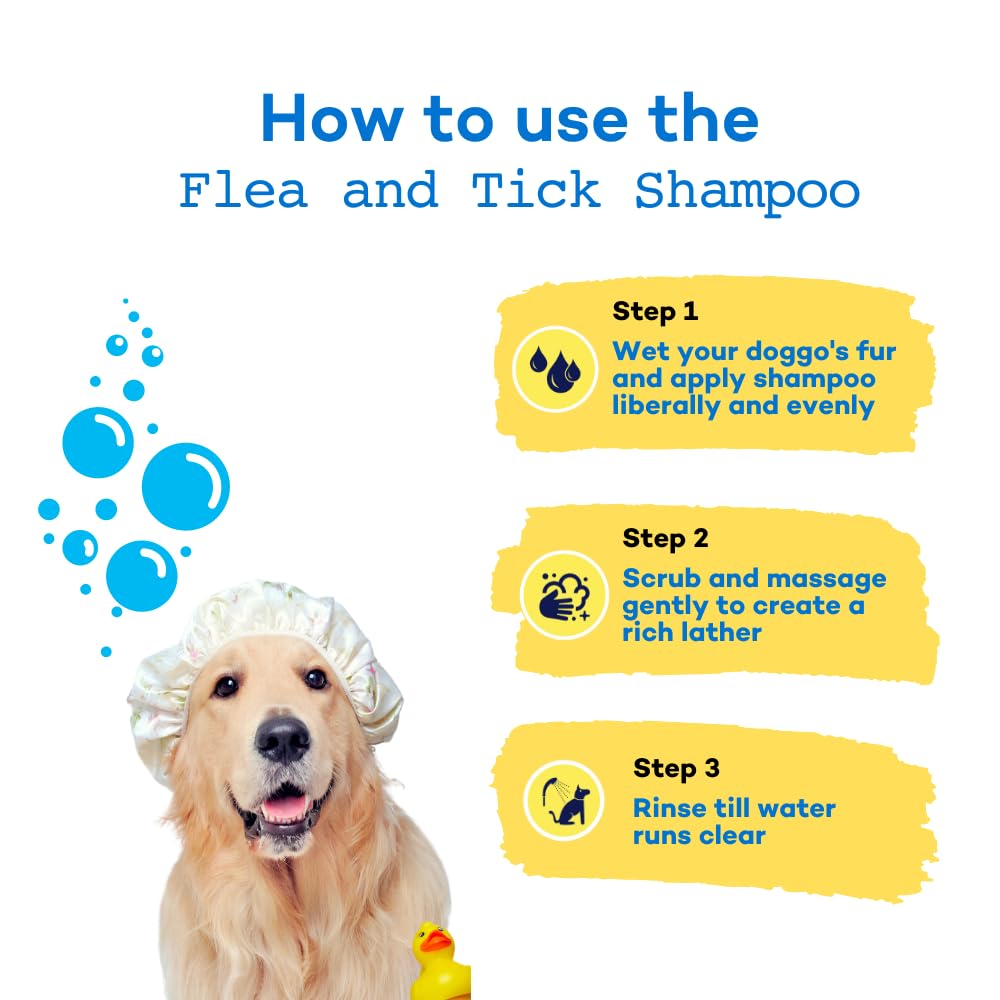
Dilution / wetting: Wet the dog’s coat thoroughly with lukewarm water. Water helps spread shampoo evenly and improves its action.
-
Shampoo application: Apply the tick free shampoo to the coat, starting from the back of the neck and working towards tail, legs, belly. Avoid sensitive areas (eyes, ears, muzzle).
-
Work into lather: Massage to work shampoo into a rich lather so that it reaches skin surface where ticks cling.
-
Leave for required time: Many tick free shampoos need to remain on the coat for several minutes (often 5‑10) to act effectively against ticks. SkyEc Tickfree suggests 5‑10 minutes. 1mg+1
-
Rinse thoroughly: Remove all shampoo residue. Leftover shampoo or active agent may irritate skin or interfere with collar treatments.
-
Dry and groom: Towel dry, then fully dry the coat if possible. Grooming helps remove any dead ticks or fleas stuck in fur.
-
Frequency: Use tick free shampoo routinely (e.g., every 2‑4 weeks depending on exposure) or more often during high risk tick season. For heavy infestation, more frequent applications may be advised, but watch for irritation.
Natural Tick Free Shampoo vs Chemical Tick Free Shampoo
There is a spectrum—some shampoos rely on synthetic actives, others on botanical or natural extracts. Each has pros and cons.
| Feature |
Natural Tick Free Shampoo |
Chemical / Synthetic Tick Free Shampoo |
| Gentleness / Suitability for sensitive skin |
Often better—less risk of harsh chemical irritation; botanical oils can soothe skin. |
Powerful, fast acting; may irritate sensitive dogs, more caution needed. |
| Speed & potency of kill / repellent activity |
Sometimes slower or weaker; best when used regularly or in lighter infestations. |
Generally quicker kill or strong repelling effect; though may be overkill in mild cases. |
| Safety in specific situations (puppies, pregnant dogs, etc.) |
Generally safer if ingredients are mild; still check label. |
Many synthetic actives are not safe for puppies under certain age, pregnant/nursing, or cats. |
| Odor / fragrance profile |
Botanical scents, more natural smell; sometimes mild and pleasant. |
Synthetic scents may be stronger; sometimes medicinal smell. |
| Cost & availability |
Natural ones can cost more; may need frequent reapplication. |
Synthetic ones often more widely available in stronger forms, sometimes at lower cost per use. |
Safety Precautions & Things to Watch For
To get the benefits of a tick free shampoo without harming your dog, here are safety tips:
-
Always test on a small patch first, especially for dogs with sensitive skin or known allergies.
-
Avoid contact with eyes, nose, mouth; if product enters eyes, rinse thoroughly.
-
Do not use on puppies under the age specified on label (commonly under 8‑12 weeks or 3 months depending on product). For example, labels for some tick free shampoos prohibit use on very young puppies. 1mg
-
Don’t use on cats unless product states safe for cats. Some ingredients toxic to cats (like certain pyrethroids or essential oils).
-
Follow usage instructions carefully: how much to use, how often; avoid leaving shampoo on longer than recommended.
-
After using, wash your hands. If any residue remains, avoid grooming behavior where dog licks itself before completely rinsed.
-
Watch for signs of irritation: redness, itching, hair loss, redness. If those occur, stop using and consult vet.
How to Choose the Best Tick Free Shampoo for Your Dog
Here are key criteria to help you pick the right product:
-
Match your dog’s lifestyle & exposure
If your dog spends a lot of time in tall grass, woods, or in tick‑prone areas, you may need a stronger formulation or frequent use. For indoor dogs, gentle formulation may suffice.
-
Skin type and breed sensitivity
Dogs with sensitive skin, skin allergies, or breeds prone to dermatitis may need botanical or mild chemical free tick free shampoo.
-
Age and health status
Puppies, pregnant or nursing dogs require safer, milder formulations. Also dogs with skin wounds or compromised barrier need careful choice.
-
Ingredients & label transparency
Check for active agents, percentages, botanical extracts, and any warnings. Products like SkyEc Tickfree clearly show ingredients like cypermethrin, tea tree oil, coconut oil, etc. Marshalls Petzone+1
-
Certifications / vet recommendations
If the product is vet approved, or from brands with good reputation, that adds confidence.
-
Smell & cosmetic appeal
Pleasant scent, good lather, ease of use, good rinse off are all more likely to encourage compliance and consistent use.
-
Price / value
Consider cost per ml, how many uses per bottle, and whether strong infestation might require more frequent bathing.
Common Mistakes Owners Make
Here are mistakes to avoid when using tick free shampoo:
-
Bathing too frequently (can strip natural oils, dry skin)
-
Not leaving shampoo long enough to work
-
Not rinsing thoroughly / leaving residue
-
Applying in the wrong order (e.g. shampoo then grooming first)
-
Using shampoo with inappropriate active ingredients for puppy, nursing, or pregnant dog
-
Not combining shampoo use with other tick prevention methods (collars, spot‑ons, environmental control)
Sample Routine Using Tick Free Shampoo
Here’s a sample schedule for a dog with moderate outdoor exposure:
-
Once every 2 weeks: Full bath with tick free shampoo.
-
After outdoor activities (long grass, woodland): spot wash or use shampoo on specific areas (legs, belly, underarms).
-
Monthly: check skin for ticks manually (ears, between toes, folds).
-
Adjust frequency during high season (monsoon, summer) when ticks are more active.
Examples of Tick Free Shampoos & Key Products
Some real products in India / globally that illustrate various formulations:
-
SkyEc Tickfree Anti‑Tick Dog Shampoo – contains cypermethrin, aloe vera, tea tree oil, coconut oil conditioner. pH‑balanced. hellokittys.in+2Marshalls Petzone+2
-
Pet Life Anti Ticks & Lice Neem Shampoo – natural neem, coconut oil, aloe vera, orange juice, etc. petlife.co.in
-
Puppiezo Anti‑Tick & Flea Shampoo – natural, pH balanced, sulphate‑free. Puppiezo
-
TropiClean Natural Flea & Tick Shampoo (Soothing) – uses lemongrass, sesame oil, etc. Heads Up For Tails
These show the range: from strong synthetic active ones (good for infestations) to more natural ones (better for routine use, sensitive skin).
Frequently Asked Questions (FAQ)
Q: How often should I bathe my dog with tick free shampoo?
A: It depends on exposure risk. Usually every 2‑4 weeks works for dogs moderately exposed. For high‑risk times or areas, you might need once a week. But avoid over‑bathing to prevent skin dryness.
Q: Can I use tick free shampoo on puppies?
A: Only if the label says safe for puppies of that age. Many products specify cut‑off ages. If in doubt, use a very mild, natural formulation or consult your vet.
Q: Is tick free shampoo enough for tick prevention?
A: Not alone. It’s great for killing or repelling ticks and keeping coat clean, but prevention is multi‑pronged: check environment, use collars or spot treatments if needed, remove ticks physically, maintain yard or yard perimeter, etc.
Q: Can I use tick free shampoo on cats?
A: Generally no, unless product explicitly says safe for cats. Some ingredients (like certain essential oils or synthetic pyrethroids) can be toxic to cats. Always check.
Q: Are natural tick free shampoos less effective?
A: Sometimes their effect is slower or less strong compared to chemical actives, especially in severe infestations. But they tend to be safer for regular use, and good for maintenance, sensitive skin, etc.
Conclusion
Using a tick free shampoo is a cornerstone of good pet care in environments where ticks are present. It helps control parasites, supports skin health, improves coat appearance, and helps prevent illness. But the effectiveness depends on choosing the right product (active agents, natural vs synthetic, safety for your dog’s age and condition), using it properly (leave the product on long enough, rinse well, avoid over‑bathing) and combining it with other prevention measures.
By paying attention to ingredients, label instructions, and how your dog reacts, you can make tick free shampoo work well for your pet. Done regularly, it can help keep ticks away, make baths easier, reduce scratching, and leave your dog smelling fresh, looking healthy, and feeling comfortable.
Combining Tick Free Shampoo with Other Tick Control Methods
While a tick free shampoo is an important tool for managing ticks on your dog, it should be part of a comprehensive tick control strategy. Relying on shampoo alone may not provide complete protection, especially in high-risk environments. Combining shampoo use with other measures can give your dog the best defense.
Tick Removal
Even with a tick free shampoo, some ticks may still latch onto your dog. It’s critical to regularly check your pet’s coat, especially after outdoor activities in wooded or grassy areas. Use fine-tipped tweezers or a dedicated tick removal tool to gently grasp the tick close to the skin and pull straight out without twisting. Early removal reduces the chance of disease transmission.
Tick Preventative Collars and Spot‑On Treatments
Many pet owners use topical spot-on treatments or tick collars alongside shampooing to extend protection. These products release active ingredients over weeks, deterring ticks from attaching. Popular active ingredients include fipronil, flumethrin, and imidacloprid. Using these with your tick free shampoo can help reduce the overall tick burden.
Environmental Control
Ticks thrive in warm, humid environments with dense vegetation. Keeping your dog’s play and rest areas clean by mowing grass regularly, removing leaf litter, and applying yard treatments can reduce tick populations around your home. This environmental control complements the action of your tick free shampoo by lowering the number of ticks your dog encounters.
Regular Grooming and Bathing Routine
Frequent brushing not only keeps your dog’s coat healthy but can physically remove ticks before they attach. Use a fine-toothed comb or flea comb, especially around the ears, neck, and underbelly—common tick hotspots. Integrating your tick free shampoo into a consistent grooming routine enhances its effectiveness and helps maintain a comfortable, parasite-free coat.
How to Manage Skin Sensitivities When Using Tick Free Shampoo
Some dogs may experience mild irritation or dryness with repeated use of tick free shampoos, especially those containing chemical actives. Here are tips to minimize discomfort:
-
Choose a formula with skin conditioners such as aloe vera, oatmeal, or coconut oil to soothe and hydrate the skin during treatment.
-
Dilute the shampoo slightly with water on the first few uses to reduce the concentration of active ingredients.
-
Limit frequency to every 2-3 weeks unless heavy infestation requires more frequent use.
-
Monitor for allergic reactions such as redness, swelling, or excessive scratching. If any signs appear, discontinue use and consult a veterinarian.
-
Alternate with a gentle moisturizing shampoo in between treatments to maintain skin barrier health.
DIY Tick Free Shampoo — Pros and Cons
Some pet owners opt to make their own natural tick free shampoos at home using ingredients like neem oil, tea tree oil, apple cider vinegar, or eucalyptus. While these can provide some repellency and cleansing, there are important considerations:
Pros
-
You control all ingredients and avoid harsh chemicals.
-
Natural oils have mild anti-tick properties and can soothe skin.
-
Cost-effective and easy to customize for sensitive dogs.
Cons
-
Homemade recipes are often less concentrated, so effectiveness against ticks may be limited or variable.
-
Essential oils like tea tree and eucalyptus must be used carefully; improper dilution can cause toxicity or irritation.
-
Lacks conditioning agents that commercial products include for coat and skin health.
-
No guarantees on consistency, shelf life, or safety without proper formulation.
If you try DIY options, always do a patch test and consult your vet, especially for young or sensitive dogs.
Tick Free Shampoo and Other Pets in the Household
If you have multiple pets, it’s important to consider how tick treatments, including shampoos, affect all animals. Many tick free shampoos are formulated specifically for dogs and may not be safe for cats or other pets. Cats, for example, can be highly sensitive to some insecticides found in dog shampoos.
Always:






Reviews
There are no reviews yet.